
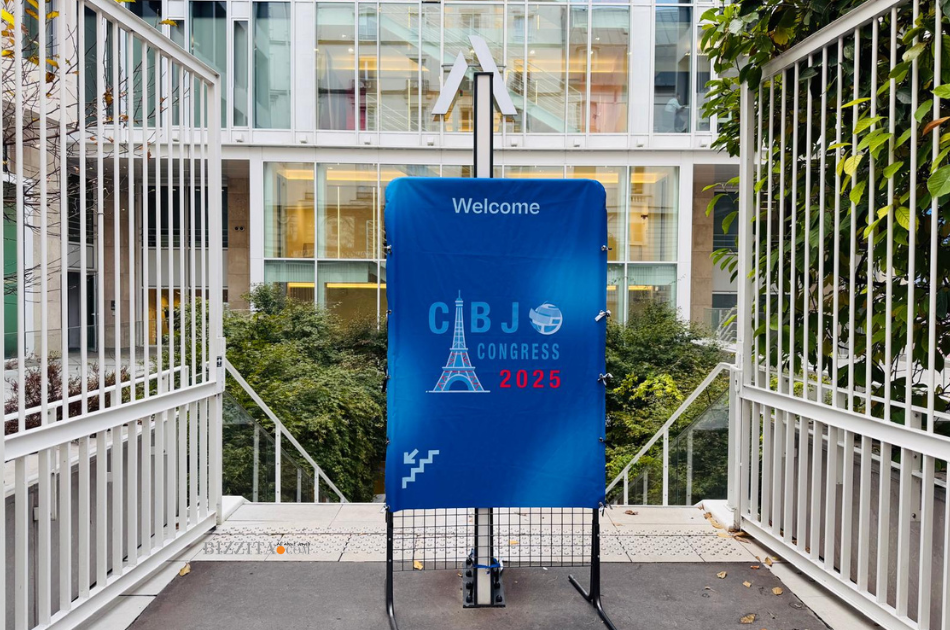
At the CIBJO Congress 2025 in Paris, the jewelry world gathered to talk about what truly shapes its future: education, shared language, and integrity. From the launch of the Blue List to lively debates on synthetic diamonds and AI, the three-day event revealed an industry in transition: more transparent, more self-aware, and still deeply passionate about craft and people.
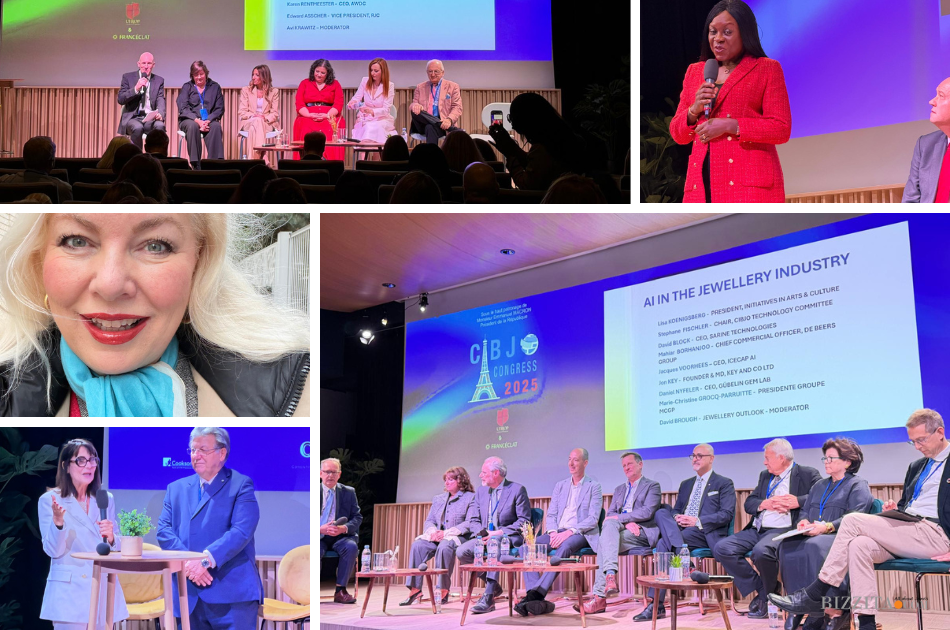
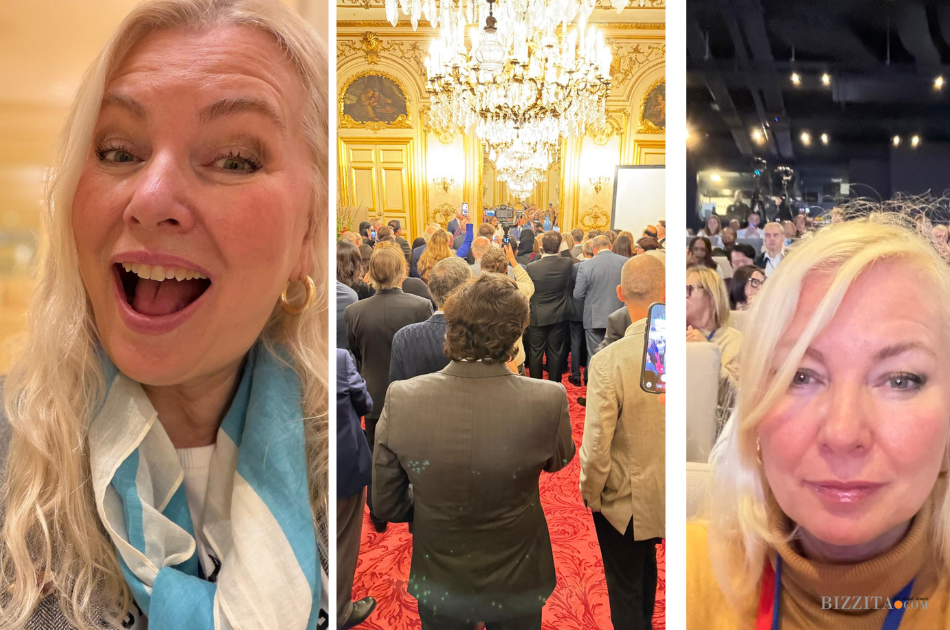
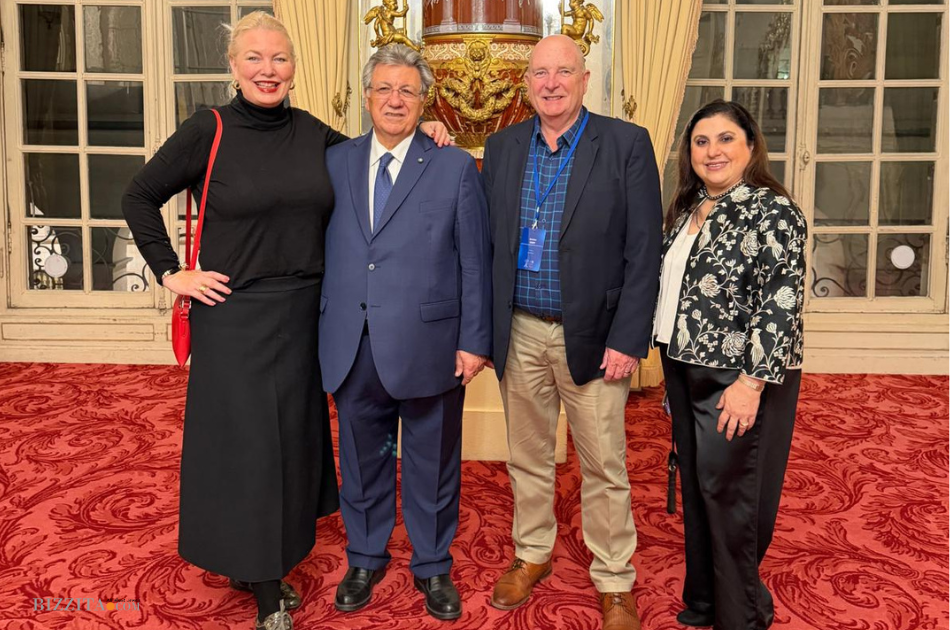
I took the Eurostar from the Netherlands to Paris, my first CIBJO Congress, and felt at home the moment I walked into the Comet Bourse auditorium. Over three days, about 350 delegates gathered to open CIBJO’s centenary year, to compare notes, to argue respectfully, and to set course for an industry that must keep earning trust.
We met on October 27 and 28 at Comet Bourse and on October 29 at UFBJOP’s headquarters for the General Assembly. The evenings were pure Paris: a gala dinner at Halles aux Grains under the glass dome of the Bourse du Commerce, Pinault Collection and a “Taste of Paris” buffet at the Palais du Luxembourg. I left with a full notebook, a lot of inspiration, and sharper questions.
Why this congress mattered
This edition had a clear spine: shared language, consumer trust, and education. From the opening session onward, leaders insisted on precision in words, quality in practice, and honesty in how we speak to the public. I heard it from brand leaders, educators, laboratories, and people who spend their days on policy and compliance. The tone was firm, and for me, hopeful.
Education and passion at the heart of the industry
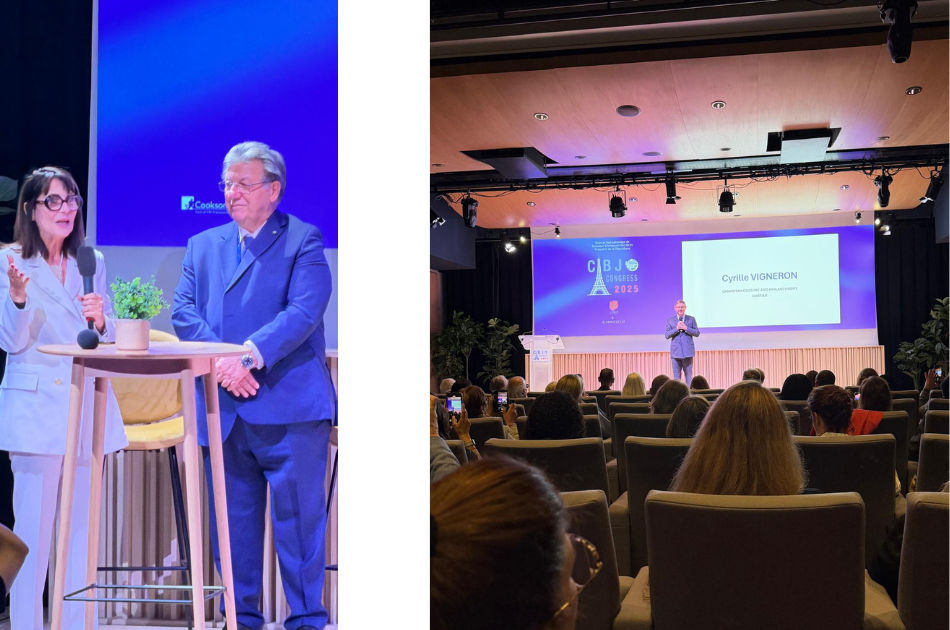
The education panel felt like the heart of the congress. It highlighted training, passion, and collaboration as the conditions for a future that is skilled and ethical. The message was not only to teach techniques but to nurture curiosity and purpose. One line stayed with me: “We are a small bridge between business and education. Our responsibility is to help students discover their passion and bring it to light.”

The French perspective, rooted in craft
France showed depth and structure. L’École Boulle, the Haute École de Joaillerie, and the French Gemological Laboratory shared concrete outcomes. The Haute École de Joaillerie trains hundreds of students each year across its main campus in Paris and regional sites such as Lyon, Aix-en-Provence, and Reims. Its diplomas are state-recognized, ranging from advanced bench skills to 3D design and modeling.
The LFG, founded in 1929, underlined its century-long service to professionals and the public. “Gemology is about passion — and sharing that passion is our duty,” a representative said.
Global networks, broader access
L’École, School of Jewelry Arts, presented an expanding network with permanent campuses in Paris, Hong Kong, Shanghai, and Dubai, plus traveling programs in cities such as Tokyo and New York. More than 350,000 people have joined its courses worldwide. The school combines exhibitions, lectures, and digital content to make jewelry arts accessible. “Our goal is to transmit knowledge and create new knowledge,” explained its spokesperson.
Qualifications and shared standards
The panel stressed the importance of recognized qualifications to professionalize the sector. France offers national craftsmanship, design, and gemology diplomas, as well as European-level certifications such as the FEEG Diploma (European Gemologist). Italy and others are building master’s programs, while France maintains university-level degrees like the DU de Gemmologie for advanced analytical work.
Fixing inconsistency
Iris Van der Veken, Executive Director of the Watch & Jewellery Initiative 2030, called for alignment and quality over quantity: “We see many models and approaches, but inconsistencies confuse employees, leaders, and retailers.” The room agreed that collaboration and shared resources beat fragmentation.
Storytelling, social media, and the bench
Education lives beyond classrooms. One speaker noted, “Use digital content to share verified knowledge and inspire both consumers and professionals.” Others reminded us that gemology is tactile: “You must touch the stones.” Online learning supports; it doesn’t replace.
Source and sustainability inside the curriculum
Edward Johnson of Gemfields urged educators to teach material origin and community impact. He invited teachers to visit Gemfields’ Kagem emerald mine in Zambia. Everyone agreed that connecting gemology to sustainability is essential for a lasting trade.
The diamond terminology debate
Several panelists raised the need to teach clear terminology. “We are not here to judge whether synthetic is good or bad,” said one. “We are here to explain what it is, factually. Education means telling the truth.”
The simple conclusion
The session closed with a reminder: “Education is teamwork. We are building the future together.” Passion remains the most valuable gem of all.
The Blue List: words that carry weight
CIBJO presented progress on the Blue List, a shared vocabulary for responsible claims. After more than five years of work and a global consultation, the committee now distinguishes between responsible, ethical, and sustainable:
- Responsible = compliance with laws and standards.
- Ethical = going beyond compliance to include human-rights and social duties.
- Sustainable = integrating environmental, social, and economic goals long-term.
Raluca Anghel said, “You can’t claim to be sustainable unless you are also ethical and responsible.”
The Blue List also separates origin, source, and provenance. Origin is where a gem was mined, source is how, and provenance combines both with accountability. “Provenance is the journey and the story we should be able to tell our consumer,” said Elodie Daguzan of the World Diamond Council.
Language sensitivity was also featured. Sarah Yood of the JVC recommended replacing grandfathered with legacy material because of the term’s racial origins in U.S. law. Lisa Koenigsberg clarified that vintage refers to jewelry 30–100 years old, while antique means at least 100 years old.
The term recycled applies to post-consumer gems, diamonds, or pearls that re-enter the market. Metals' definitions are still evolving.
On traceability, Ferial Zahid explained the difference between chain of custody (physical movement) and chain of accountability (people handling it). Both are required for true traceability. Blockchain can support but not guarantee it.
Unless scientifically proven, the committee discouraged vague terms such as eco-friendly, green, energy-efficient, and biodegradable. EU law now limits such language.
Colored-stone traceability remains complex. Ken Scarratt of CIBJO noted that over 90 percent of colored gems originate from small-scale miners and are often mixed in trading centers like Chanthaburi, Thailand. The panel endorsed practical steps like batch-level traceability.
Public feedback confirmed most definitions and will refine Version 1, which is planned for early 2026.
Honesty, transparency, and the mirror test
CIBJO President Gaetano Cavalieri spoke powerfully about integrity. “If something is leather, call it leather. If it’s synthetic, say so,” he said. Misleading a consumer is not a marketing error but a crime.
He cited China’s natural-diamond slump as a warning about lost consumer trust. Rebuilding confidence, he said, is everyone’s duty. “When I look in the mirror in the morning, I must be able to meet my own eyes.”
Cavalieri announced a new School for Craftsmen in collaboration with Italian partners — Fondazione Man Intelligenti, the Politecnico of Arts and Crafts of Confcommercio Milan, and the CAPAC school — to preserve artisanal skills in Valenza. A Center of Excellence in High and French Jewelry is also planned for 2026.
Nomenclature in France: a clear line
Bernadette Pinet-Cuoq, Executive President of UFBJOP, reiterated France’s position: laboratory-grown is misleading; synthetic is correct. The 2002 French decree defines a diamond as synthetic when man-made, therefore a non-man-made diamond is natural. She linked this clarity to consumer confidence and thanked CIBJO for the Blue List guidelines that demand proof for terms like origin.
Geopolitics in our daily work
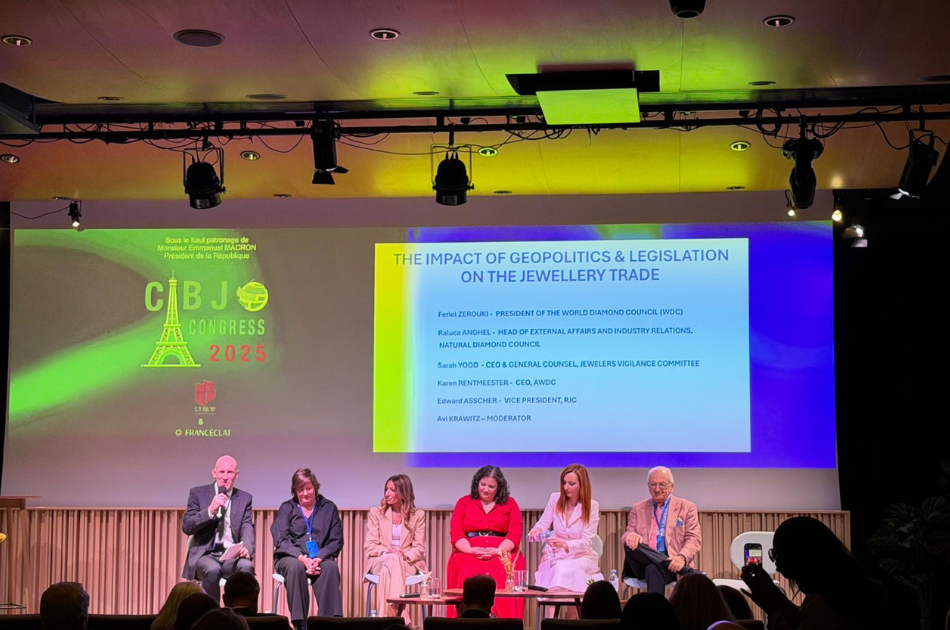
The geopolitics panel, moderated by Avi Krawitz, traced how U.S. tariffs, Russian sanctions, and ESG rules ripple through the trade. Feriel Zerouki (WDC/De Beers) explained the challenge of lobbying Washington when many sectors compete for attention. Karen Rentmeesters (AWDC) outlined ongoing bilateral deals, while Sara Yood (JVC) described exporters shifting light manufacturing to the Americas to meet “substantial transformation” requirements.
President Trump’s April 2025 tariff decree imposed a 10 percent base rate, rising after August 7 to 15–50 percent for key producers; India faces 50 percent unless it reduces Russian oil imports. Diamonds aren’t mined in the U.S., yet consumers bear the cost. The EU, meanwhile, cut tariffs on rough diamonds and colored gems to zero under Annex 3 of its trade deal.
The diamond industry: realignment and responsibility
A panel of leaders - David Kellie (NDC), Mahiar Borhanjoo (De Beers), Ravi Bhansali (Rosy Blue Belgium / AWDC Vice-President), Brijesh Shah (Hare Krishna Exports), Didier Backaert (Bonas Group), Wafa Jafri (DMCC), and Yoram Dvash (WFDB) - looked squarely at the trade’s crossroads.
Top concerns were alignment, economic instability, and consumer confusion about natural vs. synthetic. Storytelling and authenticity were named as core to rebuilding trust. Kellie warned of China’s weak recovery, and Bhansali highlighted misinformation and mixed messages within the trade itself.
Consumer behavior has shifted toward experiences, yet jewelry’s emotional power endures. In China, economic anxiety suppresses spending; in India, festive demand remains strong. Yoram Dvash noted China’s market drop of up to 90 percent in recent years, now stabilizing slightly but still fragile.
On lab-grown, panelists insisted on clarity. “If they were identical, we wouldn’t need detection machines,” said Borhanjoo. Bhansali lamented the natural sector’s poor storytelling of its community contributions. Jafri saw opportunity for learning across segments rather than rivalry. Dvash called the price collapse a wake-up call toward cooperation.
Independent retailers face succession and margin pressure; consolidation is natural. Many dealers have become jewelers. Borhanjoo quoted Nicky Oppenheimer (former chairman of De Beers): “We are a marketing company that happens to own a mine.” Marketing and trust remain central.
Supply is more fragmented. The new De Beers–Botswana agreement shifted more output to Okavango Diamond Company. Angola’s role is growing; tender houses bring both access and volatility. Bhansali called it “a more transparent yet less stable market.”
Wafa Jafri referenced the Luanda Accord for cooperation. Dvash urged unity: “We must work for the diamond itself, not for Belgium, Israel, or India, but for the industry as a whole.” Kellie closed: “Leadership means investing in storytelling, education, and emotional connection. The product is extraordinary; our task is to make people see that again.”
Africa: one session, two narratives
The Africa panel was introduced as a “market of opportunity.” African speakers offered something deeper — distinct national identities, creators addressing their own audiences, and a drive to cut and craft locally. The discussion revealed how seeing Africa as one market means missing its rich diversity and potential. (This observation is based on the October 28 session.)
AI: between promise and caution
The AI session, organized with Initiatives in Art and Culture and moderated by David Brough, stayed practical. Jacques Voorhees described retailers already using AI for product copy and online service — “a salesperson online.” He believes AI will change jobs, not remove them.
Marie-Christine Dorner (France) warned that AI cannot create emotion but can enhance teams and help transmit savoir-faire. Mahia Abrahami (De Beers) called AI a “brilliant child” that learns fast when fed data. De Beers uses it to analyze polish, symmetry, and light performance — supporting, not replacing, designers.
Daniel Nyfeler (Gübelin Gem Lab) showed how algorithms now process spectra so experts can focus on research. Gübelin plans to license its system to other labs — “democratizing expertise.”
Stefan Fischler warned about creative ownership and cultural bias. Lisa Koenigsberg added that luxury may re-center on craft and human touch. David Block (Sarine Technologies) argued that tech shifts create new roles; cleavers became planners, and there are 50,000 of them today.
The committee’s summary was balanced: AI can democratize data but needs secure infrastructure and bias awareness. Small businesses should start small and keep a human in the loop.
Mind the gap: industry to counter, counter to consumer
Between industry panels and the retail floor, much gets lost in translation. Social media can bridge it, but only if the right voices are involved early. I believe we should invite a wider group of creators, editors, and KOLs to co-design communication projects with budgets and clear briefs. Don’t guess how creators think — ask them.
Reaching the next generation
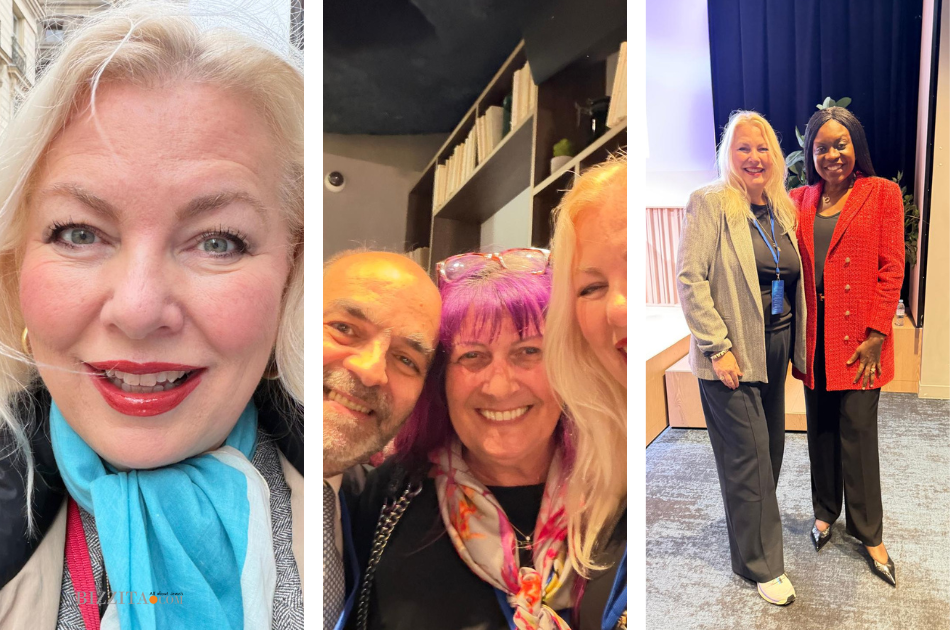
I believe in education, and I loved hearing so many commitments. But I am also a mother of a high-school student. Students hear from engineers and nurses in schools but rarely from jewelers or gemologists. How do we show a bright fifteen-year-old that a microscope can be as exciting as a screen? I dream of a traveling caravan — a mobile lab with a lapidary wheel, a microscope, a CAD station, and a master repair bench. Bring it to small towns. Let young people touch the stones and see the future we see.
Sustainability, with a calculator
One sentence echoed throughout Paris: sustainability must also make business sense. That doesn’t dilute ethics; it protects them. Clear definitions and verification help ideals survive invoices and deadlines.
A note on belonging
I felt proud to be there. Not because we solved everything, but because the work is visible. On my last day I walked with Aneta from Bliss from Paris, pointing at windows like children in front of a bakery. Paris was beautiful. The congress was intense. I learned a lot — and left with a list: a careers caravan for schools, real influencer labs at future congresses, and retail realities built into standards talks.
Highlights
- Dates & venues: 27–29 Oct 2025, Paris. Comet Bourse & UFBJOP.
- Attendance: ~350 delegates, live-streamed worldwide.
- Education: France’s leading schools (HEJ, LFG, L’École), international programs expanding.
- Blue List: definitions finalized for Version 1 (2026).
- Keynotes: Cavalieri, Pinet-Cuoq, Vigneron, Daveu.
- Panels: Geopolitics, Diamonds, Africa, Education, AI.
- Next congress: Vicenza, Italy — Sept 3–7, 2026.
My three proposals
- A traveling jewelry careers caravan for schools outside industry hubs.
- Influencer and KOL co-design labs at future trade events.
- Retail voices inside every sustainability and standards session.

© 2013 - 2025 Bizzita. All Rights Reserved
Legal Information | Copyright & Privacy Policy | Term & Conditions