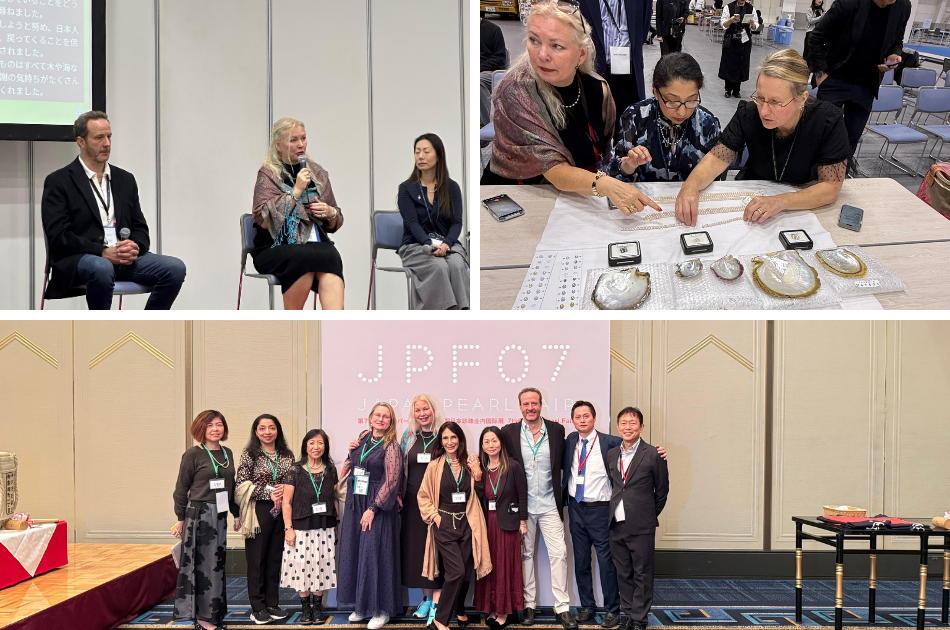
After ten days traveling Japan's pearl regions, I walked into the Japan Pearl Fair in Kobe not entirely sure a trade show with just over a hundred exhibitors would hold my attention. It held rather more than that. This is what I found there, and why I have not looked at pearls the same way since.
What the Japan Pearl Fair taught me about patience, luster, and the people who make both possible
I will be honest: when I arrived at the Japan Pearl Fair in Kobe, I was not sure what to expect from a trade show with just over a hundred exhibitors. I had spent ten days traveling through Japan before it, along pearl farms, through the Mikimoto Pearl Island museum, to Nara, Tsushima Island, Nagasaki. By the time I walked into the fair, I was already changed by what I had seen. The fair turned out to be the perfect ending to all of it. I went as an observer, not a buyer. I left with something harder to define than a purchase: a completely different way of looking at pearls, at the people who make them, and at what a supply chain can actually mean when it is built with care.
There is a particular kind of industry event that feels less like a trade show and more like being admitted into a world that has been quietly running on its own logic for a very long time. The Japan Pearl Fair, organized by the Japan Pearl Exporters' Association, is exactly that kind of event. I went expecting pearls. I did not quite expect to come away thinking differently about what it means to make something slowly, and well, in a world that has largely stopped doing either.
The fair is held in Kobe, which matters, because Kobe is not an incidental backdrop. The city has been the center of Japan's pearl export trade for decades. Ninety percent of the companies exhibiting at the Japan Pearl Fair are members of the JPEA, Japan's pearl exporters' association, founded in 1954 with a stated purpose that still resonates: to protect the quality and reputation of Japanese pearls in global markets, and to do so not through regulation imposed from outside, but through the industry's own collective sense of responsibility.
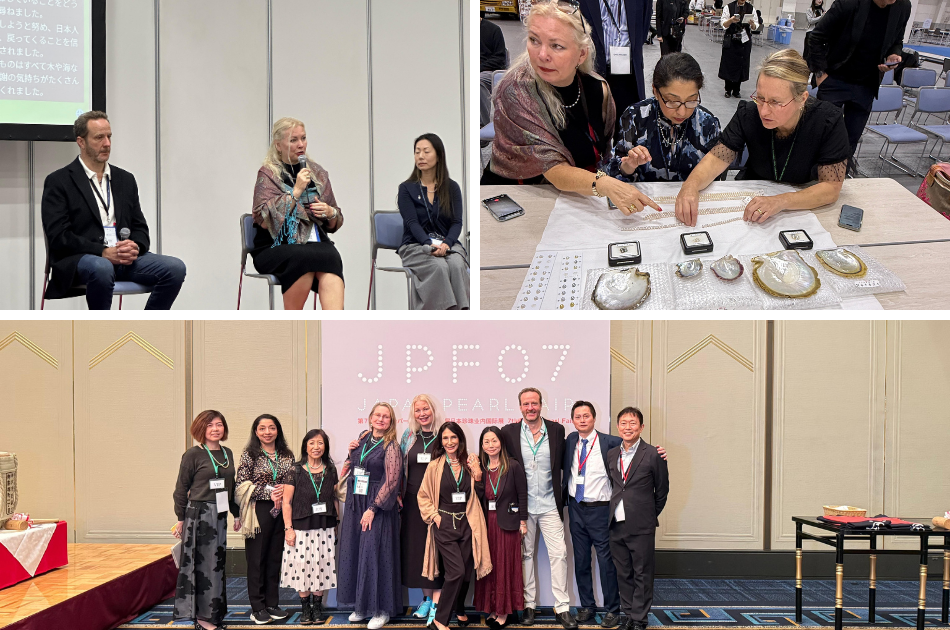
That founding ethic, self-imposed standards, long-term thinking, a belief that what you do to the market you also do to yourself, was visible all over the fair floor, if you knew what you were looking at.
Much of what I understood about that ethic came from George Kakuda, who took the time to answer my questions in depth, both during the fair and after. Kakuda speaks about the pearl industry the way people speak about things they have thought about seriously for a long time: without urgency, without marketing language, and with a precision that makes you pay attention.
What actually struck me first, though, was the openness.
Japan's pearl world has a reputation for precision and tradition, and both of those things are real. But the people I spent time with at the fair were not guarded by either. Bring a lighter register into the conversation and they would meet you there, genuinely, not out of politeness. They are not, by default, a self-deprecating crowd. The humor, when it appeared, was not volunteered. It was invited. That is actually the more interesting quality: a seriousness that does not require you to be serious back.
On the pearl itself: Akoya. The one that started everything.
Japanese Akoya pearls are cultured in Pinctada fucata martensii oysters in Japan's coastal waters, and the thing that makes them distinct is not one thing but a combination of conditions that cannot be relocated. Japan has four seasons. Water temperatures change. The nutrients that flow from the mountains into the sea change with them. This creates what Japanese pearl producers describe as a layered, complex luster, not just surface reflection, but light that appears to come from within the pearl itself. The Japanese word teri, roughly translated as "glow", captures something that English approximations of "luster" do not quite manage.
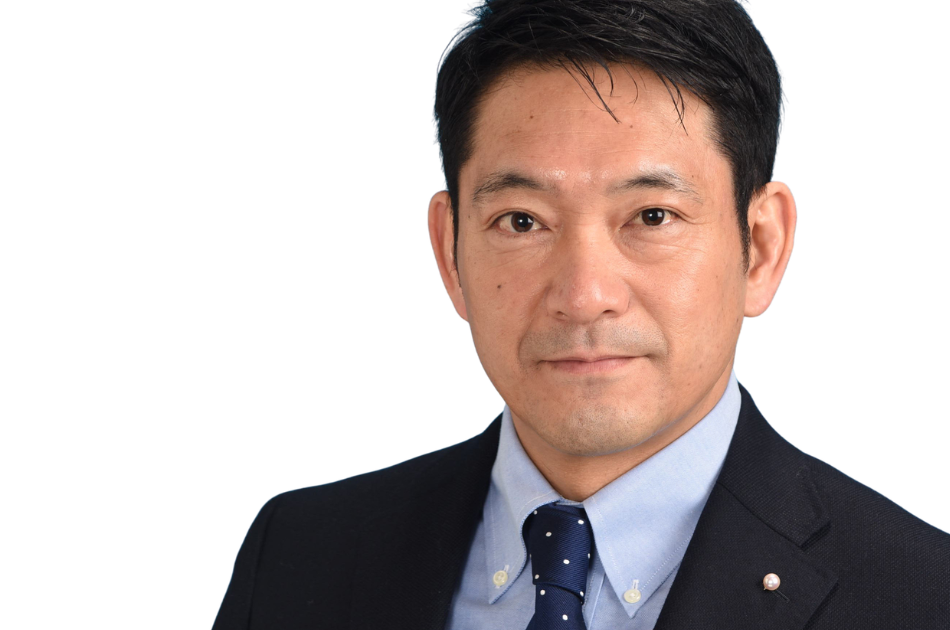
Kakuda put it directly: "Japanese pearls are characterized by a multifaceted and complex beauty, a combination of surface luster and the translucent beauty emanating from within. Unlike other pearl-producing regions, Japan has four distinct seasons. Water temperatures and the amount of nutrients supplied from the mountains vary significantly with the seasons, giving Japanese pearls their unique luster and iridescence. This is the most compelling reason to choose them."
"Japanese pearls are characterized by a multifaceted and complex beauty, a combination of surface luster and the translucent beauty emanating from within." — George Kakuda, JPEA
What is less discussed, and perhaps more interesting, is what that luster costs in time and labour. A pearl necklace passes through human hands more than four thousand times between the moment the oyster begins its growth process and the finished clasp. Four thousand. The process has not changed significantly in a century. It has not changed because the alternative, mechanization, speed, optimization, produces something measurably different, and not better.
"In today's world of advancing AI and mechanization, one can actually feel a sense of warmth in this way of doing things." — George Kakuda, JPEA
In a period of advancing AI and automation, the people I spoke to were not defensive about this. They were, if anything, quietly amused by the irony: that the thing which makes Japanese pearls genuinely difficult to replicate is precisely the refusal to make them easier to produce.
What is the JPEA?
The JPEA itself is worth understanding, because it is not just a trade body. Founded shortly after World War II, at a moment when Japan's export industries were being rebuilt from near-nothing, it was structured around a principle that was uncommon then and remains uncommon now: that quality, to be meaningful, must be collective. A single producer could raise their standards. But if others did not, the market would price down to the lowest common denominator, and the entire industry would suffer. The solution was the national export inspection system, a legal framework that prohibited the export of pearls below certain quality thresholds. The JPEA did not merely comply with this. It built its identity around it.
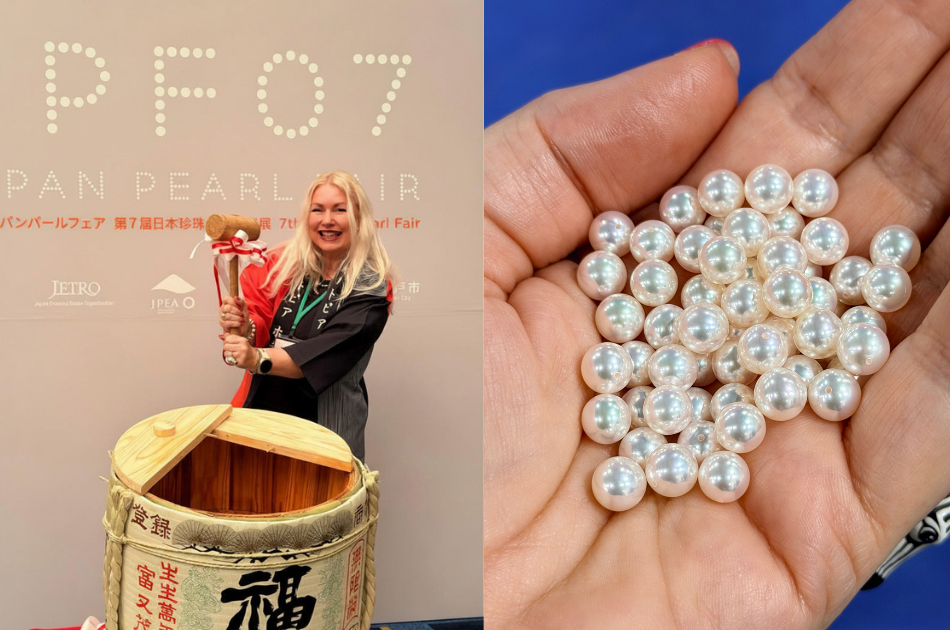
The results of that collective discipline are visible in the pearl market today. Akoya pearls are recognized by jewelers across Europe, the United States and Japan as the quality benchmark in their category. That is not a marketing claim. It is the outcome of decades of consistent, collective quality control that individual companies operating independently would not have been capable of sustaining.
When I asked Kakuda what makes the Japan Pearl Fair unique within the international pearl industry, his answer was characteristically precise: "90% of the exhibiting companies are members of the JPEA and are Japanese pearl exporters. Their enthusiasm for sharing Japanese pearls, their charm, and their own companies is what drives their hospitality."
"Their enthusiasm for sharing Japanese pearls, their charm, and their own companies is what drives their hospitality." — George Kakuda, JPEA
There is one more thing worth naming, because it is genuinely unusual in an industry context: the ecological story behind Japanese pearl farming is not greenwashing. It is, by design; structural.
The cycle of pearl farming
The cycle that pearl farming depends on is the same cycle that keeps the coastal environment alive. People living along the coast engage in agriculture; their work returns nutrients to the sea; chlorophyll levels increase; oysters and seaweed and pearl shells thrive; humans harvest them; waste is composted back into the soil; the nutrients return to the sea. This cycle has been running for a hundred years. It is not sustainable in the baseline sense of causing no harm. Kakuda went further than that word entirely.
"It goes beyond sustainability. It is even regenerative. This teaches us that humans do not dominate nature; rather, we, too, are merely a part of this cycle." — George Kakuda, JPEA
The pearl farming industry is currently working to document this scientifically, through a Pearl Impact Report designed to demonstrate that pearl cultivation is nature-positive by measurable standard. Given how much that word, sustainable, has been drained of meaning by overuse, the specificity of the Japanese case is worth noting. This is not a story about using recycled packaging. It is a story about a century-long relationship between a human industry and a coastal ecosystem, in which each has become dependent on the other's health.
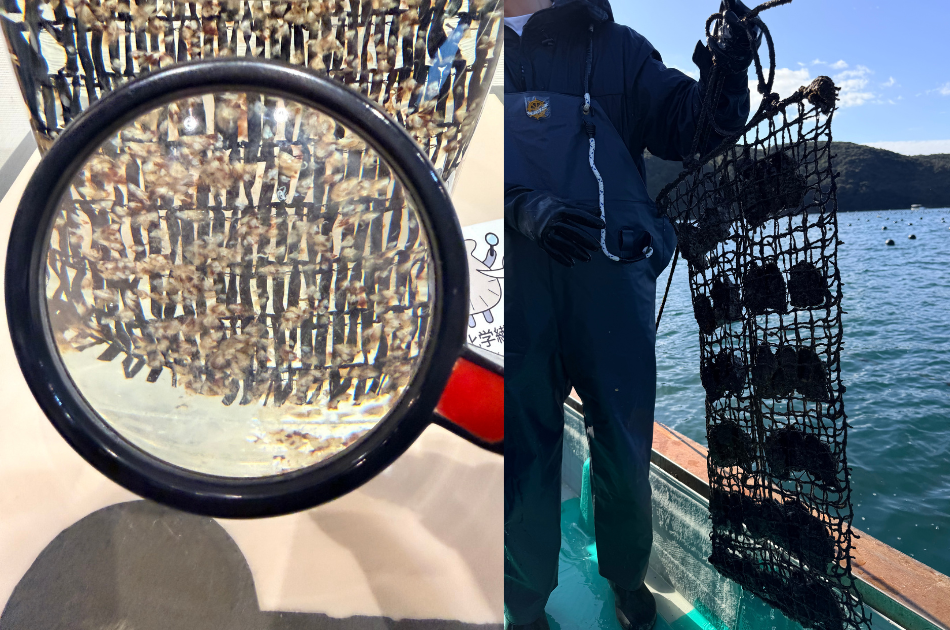
I asked Kakuda, toward the end of our conversation, how he would describe pearls in a single word. His answer was immediate: wings. Because pearls accompany ceremonies, he explained, the moments when people step into something new. They serve as wings for whatever comes next. It was not the answer I expected. It was better.
The 7th Japan Pearl Fair, in short, was not the kind of event that produces easy content. What it produced instead was a more considered understanding of why a pearl from Japan costs what it costs, why it looks the way it looks, and what kind of world produces it. Those turn out to be connected questions. The answers are not simple, but they are genuinely interesting, which is, I would argue, the more important thing.
Comments (2)
Leave a comment

© 2013 - 2025 Bizzita. All Rights Reserved
Legal Information | Copyright & Privacy Policy | Term & Conditions
Nicolas Martinon
Thank you Esther for this article, testimony of your presence at the Kobe exhibition and your visits to Japanese pearl farms.
The people behind the pearl of culture is a real subject and it is exciting.
These companies have an extraordinary role at the local level, whether social and especially ecological.
A good quality pearl can only be harvested from a balanced and respected environment.
Pearl farmers are humble and have a medium and most of all a long-term vision of their work; this is an example that many leaders should be inspired by; don’t you think?
reply
Esther Ligthart
Thank you, Nicolas. I could not agree more!
reply