Jewelry retailers are entering a new phase of the market.
Growth is still visible in value, but beneath the surface, something else is happening. Fewer consumers are buying, prices are rising, and the distance between product and customer is quietly increasing.
This article explores what sits behind that shift and how to respond before it becomes a structural problem.
Jewelry Market Trends 2026: Growth Without Volume
Something is shifting in jewelry retail.
Not just in how we sell, but in who we are still reaching...and who we are quietly losing.
And the latest numbers make this impossible to ignore.
According to recent data from Tenoris, the U.S. jewelry market is growing in value — up 10.7% year on year — but shrinking in reach.
Unit sales are down across the board. Overall volume has dropped 7.4%. Diamond units are down 10.9%. Gold jewelry has fallen even further, by 14.8%.
What is driving growth is not more demand, but higher prices. Average retail prices have increased sharply: up 19.6% across all jewelry, 18.5% for diamonds, and an exceptional 36% for gold.
In other words, the market is inflating while contracting.
Fewer people are buying. And those who do, are paying significantly more. For a sector already struggling to stay emotionally relevant to a changing consumer, this is not a temporary shift but a clear signal.
The distance between jewelry retail and the everyday consumer is growing and it is growing fast.
Jewelry retailers face the same lifecycle challenges as the broader retail industry: growth through expansion, digital transformation, and eventual refinement. By understanding these phases, combined with changing consumer expectations and buying psychology, jewelers can better align their strategy, improve profitability, and remain relevant in a shifting market.
Retail Is Not Failing — It Is Moving Through Predictable Phases
A long-term analysis of U.S. retail chains, published by Harvard Business Review, shows that retail businesses do not struggle randomly. They tend to move through three distinct phases: growth through expansion, growth through digital channels, and eventually growth through discipline and profitability.
What determines success is not effort, scale, or even brand strength. It is alignment. Retailers underperform when they continue to apply a strategy that belongs to an earlier phase of their development.
This pattern is clearly visible in jewelry retail.
Many stores continue to operate under assumptions formed over years of physical growth, while their customers have already moved into a different behavioral phase. The result is not an immediate decline, but a gradual loss of momentum that is often difficult to diagnose.
Understanding where your business stands within this lifecycle is no longer optional. It is a strategic necessity.

The Three Phases of Retail — Translated to Jewelry
Phase 1: — Growth Through Expansion
In the early stage, growth is driven by increasing visibility and availability. Retailers expand their footprint, broaden their assortment, and invest in attracting new customers.
In jewelry retail, this often takes the form of:
- adding brands or collections
- expanding bridal or watch categories
- increasing inventory depth
- opening additional locations
This phase can be highly effective, but it depends on clarity. The strongest retailers define what they want to be known for and build consistently around that.
Without a clear value proposition, expansion leads to dilution rather than growth.
Phase 2:—Growth Through Digital Presence
Once physical expansion slows, growth shifts toward digital channels. This includes not only e-commerce, but also visibility, communication, and trust-building across platforms.
For jewelry retailers, this means:
- a strong, clear, and fast website
- visibility in search results for relevant queries
- consistent communication through content and social media
- integration between online discovery and in-store experience
Customers now begin their journey online. They search, compare, and evaluate before making contact. If a retailer is not present, or not convincing in that moment, the opportunity is often lost.
Digital growth in jewelry is not about competing on volume. It is about establishing credibility and guiding the customer before they step into the store.
Phase 3:—Growth Through Discipline and Profitability
At a certain point, adding more no longer drives meaningful growth. The focus shifts from expansion to efficiency, margin, and clarity.
In jewelry retail, this phase requires:
- tighter inventory control
- fewer markdowns
- more selective buying
- a clearer assortment strategy
Excess inventory is one of the most common structural weaknesses in jewelry retail. It ties up capital, reduces flexibility, and often leads to discounting, which weakens positioning over time.
Retailers who succeed in this phase do not necessarily do more. They do fewer things, with greater precision.
Why Consumer Expectations Have Shifted — And Why Jewelry Should Benefit
The retail lifecycle explains how businesses evolve. Consumer behavior explains why the pressure is increasing now.
Consumer research from Foresight Factory highlights a number of shifts that are directly relevant to jewelry retail today, particularly around how people value craftsmanship, make decisions, and connect emotionally to products.
The Return to Human Craft
Consumers are increasingly reacting against what is described as “algorithmic sameness.” In a world shaped by AI-generated content and optimized experiences, there is renewed value placed on human skill, originality, and visible effort.
Jewelry is uniquely positioned here.
Few product categories can demonstrate craftsmanship as clearly. Every piece reflects human decisions, technical expertise, and material knowledge. Yet much of jewelry retail still leads with pricing, collections, and trends, rather than with the process and people behind the product.
This is not a limitation of the product. It is a missed communication opportunity.
The Need for Trusted Guidance (“Choice Partners”)
As choice increases, so does decision fatigue. Consumers are actively looking for trusted sources to guide them.
In jewelry retail, this creates a clear opportunity.
A knowledgeable jeweler who understands both the product and the client provides something no algorithm can replicate. The ability to interpret preferences, explain differences, and guide a decision is increasingly valuable.
However, this role is often underdeveloped. Staff are frequently trained on product features, but not on storytelling, context, or advisory positioning.
In the current landscape, expertise is not a support function. It is a core asset.
The Shift from Presentation to Connection (“Presence Purity”)
Consumers are becoming less responsive to perfectly curated environments and more interested in experiences that feel genuine and personal.
Jewelry, by its nature, is deeply emotional. It is worn on the body, associated with memory, and tied to identity.
If the retail environment feels overly staged or transactional, that emotional potential is weakened. The product carries meaning, but the experience fails to deliver it.
Retailers who focus only on visual perfection risk missing the deeper connection customers are seeking.
More Critical Spending, But Stronger Identity Purchases
Consumers are becoming more selective in how they spend. They are questioning value, materials, longevity, and meaning more carefully than before.
At the same time, they are willing to invest in products that reflect their identity, values, and personal story.
Jewelry sits at the intersection of these behaviors.
It can justify its value through craftsmanship, materials, and durability. It can also serve as a strong expression of identity. But this only translates into sales when the retailer can clearly communicate both.
A beautiful object without context is no longer enough.
What Buying Psychology Reveals About Jewelry Sales
Research by Kate Barasz and colleagues at Harvard Business School shows that people are more likely to complete a purchase when items are framed as part of a cohesive set.
The underlying mechanism is simple: people are motivated by the urge to complete. They prefer to finish something that feels structured and whole.
This has practical implications for retail.
The way products are grouped, presented, and described can influence how much customers buy. A collection that feels incomplete invites continuation. A structure that suggests a clear endpoint encourages action.
For jewelry retailers, this insight goes beyond traditional product grouping. It points toward the importance of coherence, narrative, and structure in how collections are presented.
The opportunity is not just to sell individual pieces, but to create a sense of progression and connection that encourages ongoing engagement.
Where Theory Meets Practice
The above paragraph on cohesive sets is based on an article I read. I wanted to include this specifically, because although in the grand scheme of things, it might seem just a small observation. Perhaps to some of you an obsolete one at that.
I would look at this idea of a “collection” a little more broadly than the traditional pairing of a necklace with a ring or earrings.
Yes, a matching bracelet and necklace remains a classic combination. But in all the years I stood behind the counter myself, I noticed something quite striking: people rarely bought a full set, even when we offered it.
What resonated far more was the idea of a theme.
You see it in collections like DoDo by Pomellato, where pieces invite you to build something over time. Or in a focused collaboration with a designer within a brand, creating a capsule that feels distinct, collectible, and often draws attention far beyond the product itself.
A collection can also grow from something deeply personal. A topic close to someone’s heart. It could be a hobby, certainly. But think of something like zodiac signs. Astrology opens up an entire universe of symbols, meanings, and objects that people can connect to and collect over time.
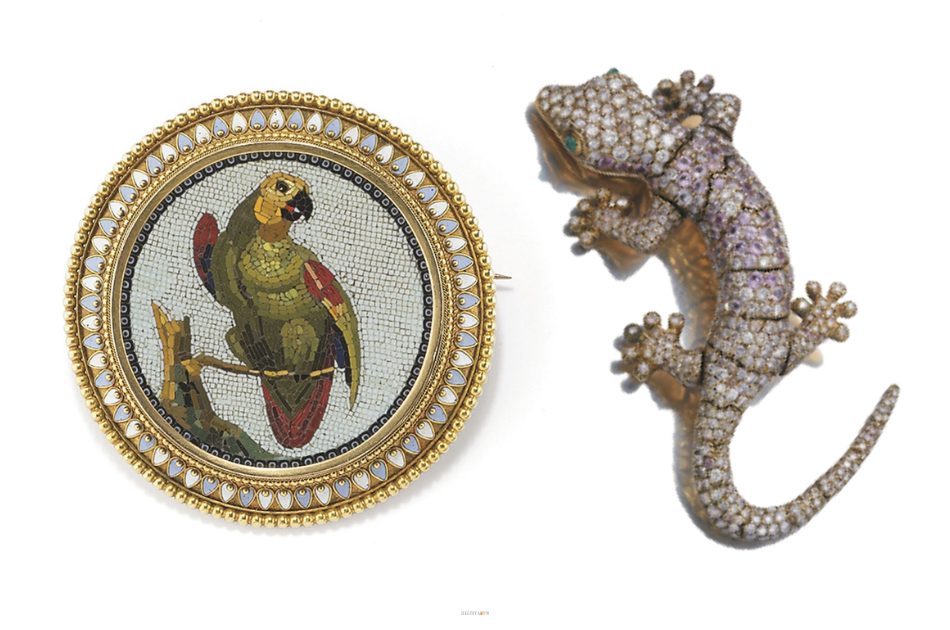
Personally, I have always had a soft spot for animal jewelry. I would love to see collections built around birds, insects, or even local species tied to a specific region. There are endless directions one could take here.
And this is where the word “storytelling” — so often used, yet rarely made tangible — suddenly becomes very practical.
A theme gives you something to build on. It creates stories for your marketing, for your sales conversations, and, perhaps most importantly, for the people who buy and wear the pieces.
So there you go. This one is free. 😉
Jewelry Is Perfectly Positioned — Retail Execution Often Is Not
Taken together, these insights reveal a clear tension.
Jewelry, as a product category, aligns closely with current consumer expectations. It is human-made, emotionally significant, identity-driven, and tactile. It offers exactly the qualities many consumers are actively seeking.
Yet at the retail level, that potential is often underutilized.
Stores continue to rely heavily on assortment, display, and product features, while underinvesting in storytelling, guidance, and strategic clarity. Digital presence is often inconsistent. Inventory management is frequently inefficient. The role of the jeweler as a trusted advisor is not always fully developed.
The gap is not in relevance. It is in execution.
Conclusion: Growth Now Depends on Alignment
Jewelry retail does not require reinvention. It requires alignment.
- Alignment with the phase of the business.
Alignment with how customers search, evaluate, and decide.
Alignment with what makes jewelry valuable in the first place.
Retailers who understand where they stand and adjust their strategy accordingly are better positioned to move from stagnation to sustainable growth.
The question is no longer how to do more.
It is about doing the right things at the right time, with clarity.
Why I write these articles on jewelry retail and marketing:
As someone who has spend over 30 years in this jewelry industry, who actually worked running a jewelry store, was a buyer, was a sales agent, and was the person brought into the room when two brands had some serious damage to their reputation, I KNOW all too well what the challenges of daily life in this industry can be. And I also understand that running a jewelry store can be challenging enough, but as everyone running a small business (and even a larger one), our focus on the daily stuff can keep us away from what is happening outside our stores, our factories, our workshops, our design tables. THAT is why I write these articles. So you can see what is happening and decide to do something with the information, or not. But hopefully, these writings inspire you to peep outside the daily bubble for just a bit and who knows, give you a fresh idea for your business.
If you did enjoy this, or if you have a question, don't hesitate to leave a comment or contact me on LinkedIn.
This article draws on insights from Harvard Business Review on retail lifecycle strategy, consumer trend analysis by Foresight Factory, and research by Barasz et al. (Harvard Business School) on set completion and consumer behavior. Market data referenced is based on recent reporting by Tenoris.
Esther Ligthart is a jewelry industry expert, writer and founder of Bizzita.com, with over 30 years of experience in the international jewelry business.

© 2013 - 2025 Bizzita. All Rights Reserved
Legal Information | Copyright & Privacy Policy | Term & Conditions