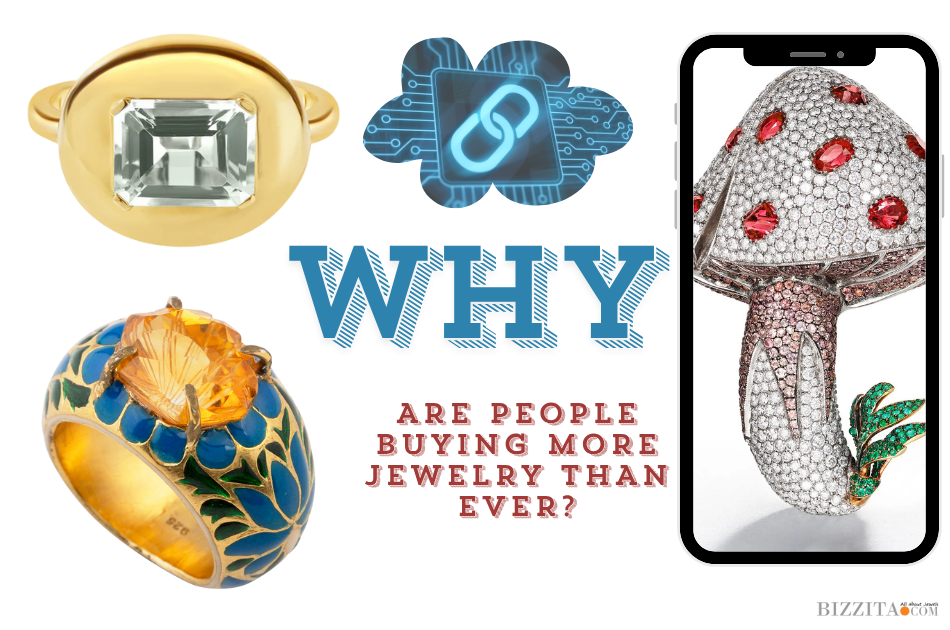
Jewelry is having a moment. From blockchain-certified earrings to platinum's slow return in China, and from women reshaping the engagement ring market to the Bridgerton effect on antique-inspired gems, it's clear: jewelry is back in the spotlight.
In this blog, I'm sharing what's happening in the jewelry world this week. It's for professionals, collectors, and anyone who simply loves jewelry.

Is Blockchain the Future of Fine Jewelry?
Geneva-based designer Suzanne Syz is investing heavily in blockchain. Every one of her 1,001 pieces is now certified with a digital passport.
This tech used to be reserved for select collections at bigger houses like Cartier or Chopard. But Syz is offering complete transparency for everything she makes, and that's new.

In partnership with Origyn, a Swiss tech foundation, she's giving each jewel a digital certificate. The certificate includes biometric data, ownership history, and media files. If the jewel is resold or stolen, that information goes with it.
It's a smart way to preserve both value and story. It also builds trust with buyers who care about where something comes from. And it tells us something bigger. That digital storytelling and transparency are shaping how we value beauty.
Why Are Jewelry Sales Growing While Other Sectors Shrink?
While luxury fashion and handbags are slowing down, jewelry is holding strong. According to Citigroup, U.S. jewelry sales grew 10.1% in May 2025.
That's big.

People are looking for emotional and tangible value. They're noticing that while handbag prices shot up 30–40%, fine jewelry remained relatively stable. A brand like Cartier raised its prices slightly, and people responded by buying more.
Citi's Thomas Chauvet explained it well: When someone has 3,000 dollars to spend, they often prefer something precious and lasting, with emotional value—something they can wear for years or pass on. In other words, jewelry feels more like a treasure than a trend.
What's Going On With Platinum in China?
Behind the scenes, Chinese manufacturers are stockpiling platinum. Prices have jumped. Yet end customers still seem to prefer gold.
Refiner Johnson Matthey reports that consumer demand remains muted. So, while factories are filling their vaults, it's not yet translating into sales. That mismatch could lead to overstock or a shift in how platinum is positioned and promoted.
If you're in manufacturing or sourcing, keep an eye on this. It may affect how much platinum will make it to market, and at what cost. More on this on: Bloomberg News
Can Jewelry Still Spark Innovation and Belonging?
When Nicole Wegman went shopping for an engagement ring, she left overwhelmed. The experience felt outdated, pushy, and disconnected.
So she built her own company: Ring Concierge.
She started from her apartment with just 2,000 dollars, bootstrapped the entire thing, and turned it into a jewelry business that now has locations across the U.S.

Her idea? Make the process transparent. Make it woman-friendly. Speak to a new generation of buyers. What I love about her story is that it shows how much space remains in our industry for fresh ideas, thoughtful experiences, and a softer approach.
Not everything has to be polished to perfection. Sometimes, it just needs to feel real.
Wegman is joining the panel at Newsweek’s Women’s Global Impact Forum on August 5, 2025, hosted at their headquarters in One World Trade Center, New York City.
The event brings together senior female leaders and rising talent from across industries to exchange ideas on leadership, innovation, and how they are paving the way for more women to succeed in business.
Is There Hope for Growth in the Jewelry Industry?
Yes. Even with slower growth overall, U.S. jewelry sales rose again in May.
They're not exploding like they did in late 2024, but they're not fading either. The latest figures were revised upwards. May saw a 2.8% rise, and April's numbers were more substantial than first reported.
What does that tell us?
That people are still buying jewelry. Still gifting it. Still collecting it. Even when the economy feels uncertain. That kind of steady growth, slow and meaningful, is often how the most beautiful things survive. Source: Idex Online
How Do Culture and Stories Shape What We Buy?
Let's talk about Bridgerton.
Kastur Jewels, a small London brand with deep roots in Indian and Kenyan heritage, saw its pieces worn by the Sharma sisters in the show.

That moment brought global visibility. But it wasn't random. The founder, Rajvi Vora, designs jewelry steeped in history and meaning. She works with artisans in Jaipur and Nairobi who still use ancient techniques. Some trace their roots back to royal courts.
The pieces may look simple on screen, but carry generations of craftsmanship.
So, when a Netflix show includes a piece like that, it's not just a costume. It's storytelling, and it resonates. Full story on Shondaland.


© 2013 - 2025 Bizzita. All Rights Reserved
Legal Information | Copyright & Privacy Policy | Term & Conditions