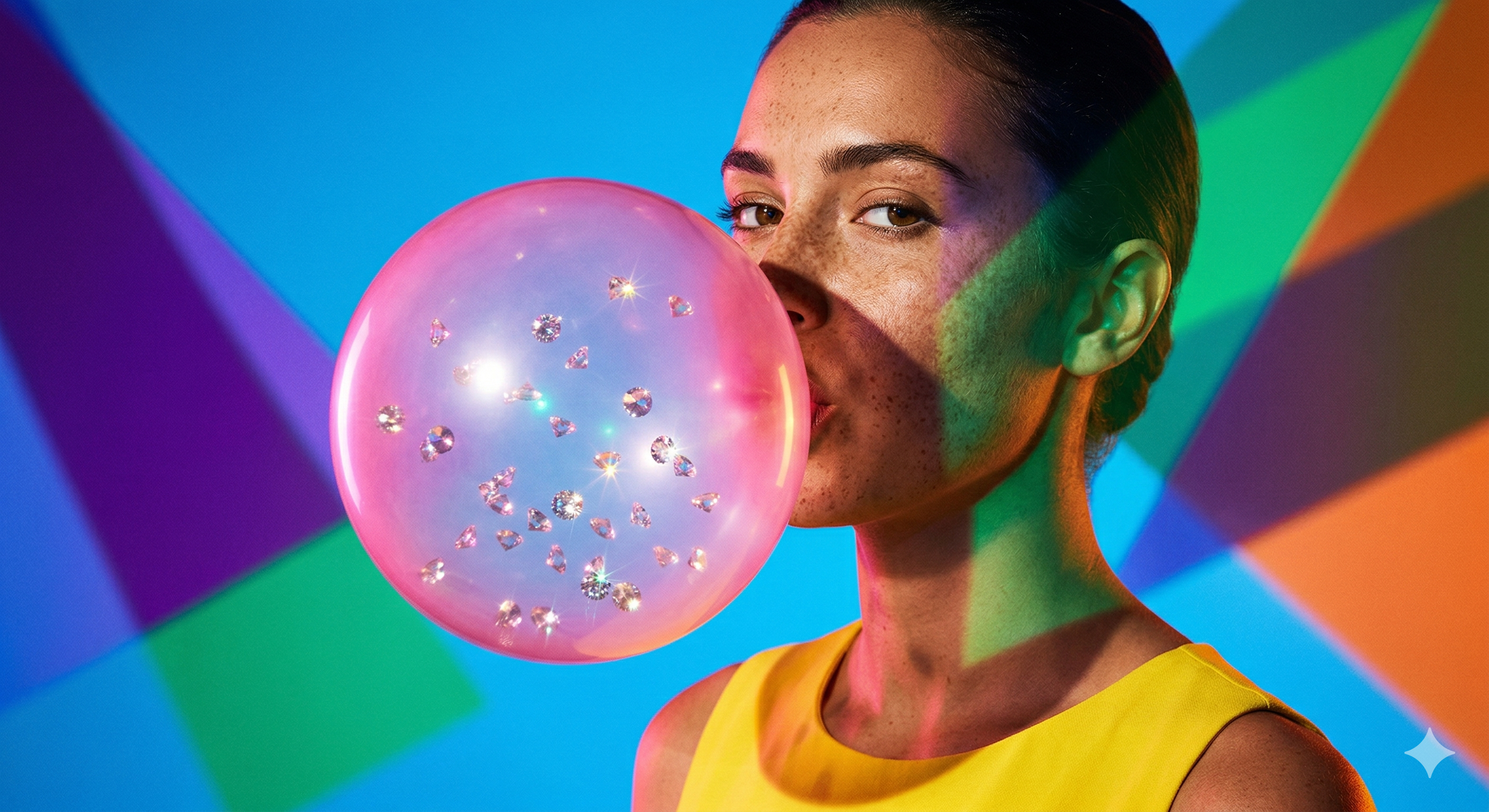
The diamond industry has its biggest day. Over 1,000 posts online. Major brands. Producing nations, trade organizations. And my 17-year-old son didn't notice. Here's why that matters more than the celebration.
The inaugural World Diamond Day showed the industry can show up in force. Now comes the harder part: showing up for the people who actually walk into jewelry stores.
Quick answer — what is World Diamond Day?
World Diamond Day is an annual industry event held on April 8, designated by the Natural Diamond Council and the World Diamond Heritage Board to celebrate natural diamonds through storytelling, consumer outreach, and trade participation worldwide.
On April 8, 2025, the global diamond industry did something it had been quietly wanting to do for years: it spoke with one voice. Diamond-producing countries from Botswana to Canada joined the chorus. Retailers such as Signet and Chow Tai Fook participated. Brands from Repossi to Buccellati posted. There were more than 1,000 #worlddiamondday posts on Instagram before the day was half over. A podcast was announced. The CEO of De Beers Brands held up a 177-carat rough diamond in South Africa and called it "a pure nature wonder formed 3 billion years ago." It was, undeniably, a moment.
So why am I sitting here, just slightly outside the applause?
Not because the initiative is wrong. It isn't. Not because the industry doesn't deserve a moment to celebrate something real. It does. But because I have a 17-year-old son who, somehow, ended up in a conversation with his friends about diamonds last week, and what he said stopped me in my tracks.
He believes natural diamonds are not sustainable. He believes lab-grown are the logical, forward-thinking choice. He didn't get this from anyone in the industry. He got it from the internet, filtered through the only sources his generation actually trusts: people who are clearly not being paid to say what they say. And no amount of branded testimonials from jewelers and diamond executives is going to change that — at least, not the way natural diamond marketing is currently being done.
"He is not rejecting diamonds. He is rejecting who is telling the story...and more importantly, why."

The bubble problem
Here is the thing about World Diamond Day that the industry should sit with, honestly: it worked brilliantly inside the trade. The participation was impressive. The storytelling was genuine in many cases, those Instagram posts about engagement rings and fathers' factories and years of carrying diamonds across continents were real, and some were genuinely moving. But the final consumer? The person who walks into a jewelry store once every few years, slightly overwhelmed, unsure whether they are going to spend too much or buy the wrong thing or get taken advantage of? That person did not notice World Diamond Day.
And that gap — between industry volume and consumer awareness — is the real conversation that needs to happen.
The Natural Diamond Council has said it wants World Diamond Day to become "the activation of a collective voice." That is a wonderful ambition. But a collective voice shouting inside a closed room is not the same as a collective voice that carries. The industry has confused participation with penetration, and the two are very different things.
What lab-grown did right — and what it really means
Let's be honest about lab-grown diamonds for a moment, without the defensiveness that so often creeps into this conversation. Lab-grown diamonds won the first round on two things: price and story simplicity. The story — cleaner, cheaper, modern — is easy to understand, easy to repeat, and easy to feel good about in thirty seconds. Whether the full story holds up under scrutiny — and the environmental picture is, to put it mildly, more nuanced than the headline suggests; is almost beside the point. The story travels. It is already in the mind of my son and his peers.
Natural diamond marketing, by contrast, often responds to this with complexity, defensive arguments, and internal industry language that means nothing outside trade show walls. The answer to "but lab-grown are more sustainable" is not a white paper. It is a simple, honest sentence that a jewelry store employee can say without reaching for a pamphlet.

Three things every natural diamond needs to be able to say — simply
Here is what I think gets lost in the industry conversation. The real customer, the one buying a jewel, not a diamond, because most people shop for a piece they love, not a gemological category, doesn't need the whole story. They need a few clear, true things that they can hold onto and feel good about. So here, in the plainest possible terms, are three that actually land:
First: it was made by this planet, over billions of years, under impossible conditions. That is not a marketing line; it is a fact that, once said plainly, tends to stop people. There is no factory involved. No investment return on production runs. Just the earth, doing something extraordinary over an almost incomprehensible stretch of time. (And yes, natural diamonds still take around one to three billion years to form, so no, the earth is not exactly restocking them quickly.)
Second: the price reflects a journey. Not a markup, not a margin game, but a supply chain that employs real communities; in Botswana, in Namibia, in Canada, where the alternative is often very little. This is not greenwashing; it is, in many cases, a documented economic reality. But the industry needs to tell it as a human story, not a corporate responsibility appendix.
Third, and this one matters most for the sales floor, when a customer raises a lab-grown, the answer is never a debate. It is a question: what matters most to you about this piece? Because the customer who values rarity, origin, and the idea of something genuinely formed by nature will find their own answer. The customer who simply wants a beautiful stone at a lower price point may well be happier with lab-grown, and that is not a failure. It is honest retail.
"Never defend. You will not win. Ask, listen, and then tell the story; simply, clearly, honestly."

So, where does that leave World Diamond Day?
I applaud it. I genuinely do. The intention behind it, to pause, align, and speak with purpose, is exactly right. The choice of April 8 is charming (the figure eight turned sideways becomes infinity; diamonds are forever; you see what they did there). The participation showed that the industry can mobilize, which is no small thing.
But next year, the question to ask is not "how many posts did we generate?" It is "how many people outside our industry heard us, and trusted what they heard?" Because right now, the answer to the second question is: not enough. And until the industry steps out of its own very comfortable, very well-intentioned bubble, that is unlikely to change.
The natural diamond story is genuinely worth telling. It just needs to be told to the right people, in the right language, without self-congratulation or defensiveness. Less talking to each other. More sitting across the counter, or the kitchen table, from someone who has never thought twice about where a diamond comes from, and finding out what actually matters to them.
That is where trust is built. Not on Instagram. Not on World Diamond Day. One honest conversation at a time.
The biggest challenge facing natural diamond marketing in 2025 is not lab-grown competition on price; it is the trust gap between what the industry communicates and what consumers actually hear and believe. Closing that gap requires simpler storytelling, better floor-level training, and fewer conversations with insiders and more with the people who walk into jewelry stores.
Esther: I would love to know what your experience was with World Diamond Day, what you think of the initiative and, of course, what you think the audience thinks about natural diamonds.

© 2013 - 2025 Bizzita. All Rights Reserved
Legal Information | Copyright & Privacy Policy | Term & Conditions